You picked up your dog after a fresh bath, expected a fluffy “spa day” smell, and then noticed it: your dog still smells.
You may be wondering, “Why does my dog smell after grooming?”
A bath can remove dirt, loose hair, and surface oils. However, grooming cannot always remove an odor that starts inside the ears, under the coat, around the anal glands, or in the mouth. In some cases, the smell may point to a skin or health concern that needs veterinary attention.
As an experienced mckinney mobile dog groomer, Dive Into Dogs helps families understand the difference between normal doggy odor and a persistent smell that needs more investigation.
Why Does My Dog Smell After Grooming?
The most common reason is simple: the bath cleaned the coat, but the odor did not originate only on the coat.
Your dog’s ears, skin, mouth, paws, undercoat, and rear area can all create different types of smells. Texas heat, summer humidity, swimming, and an active outdoor lifestyle can make those odors return quickly.
Here are the most common causes.
1. Your Dog’s Undercoat May Still Be Damp
A thick coat can feel dry on top while remaining damp close to the skin.
This is especially common with double-coated breeds, including:
- Golden retrievers
- Labrador retrievers
- German shepherds
- Huskies
- Australian shepherds
- Bernese mountain dogs
When moisture becomes trapped in the undercoat, bacteria and yeast can multiply. This can create a musty, sour, or “wet dog” smell. In warm, humid North Texas weather, a damp coat may also contribute to hot spots and skin irritation.
Air-drying is often not enough for a large or fluffy dog. The coat needs to be dried thoroughly down to the skin.
A professional grooming visit includes careful drying, brushing, and coat evaluation. This helps remove loose undercoat, trapped debris, and moisture that may otherwise leave your dog smelling fresh for only a short time.
2. Ear Infections Can Cause a Strong Odor
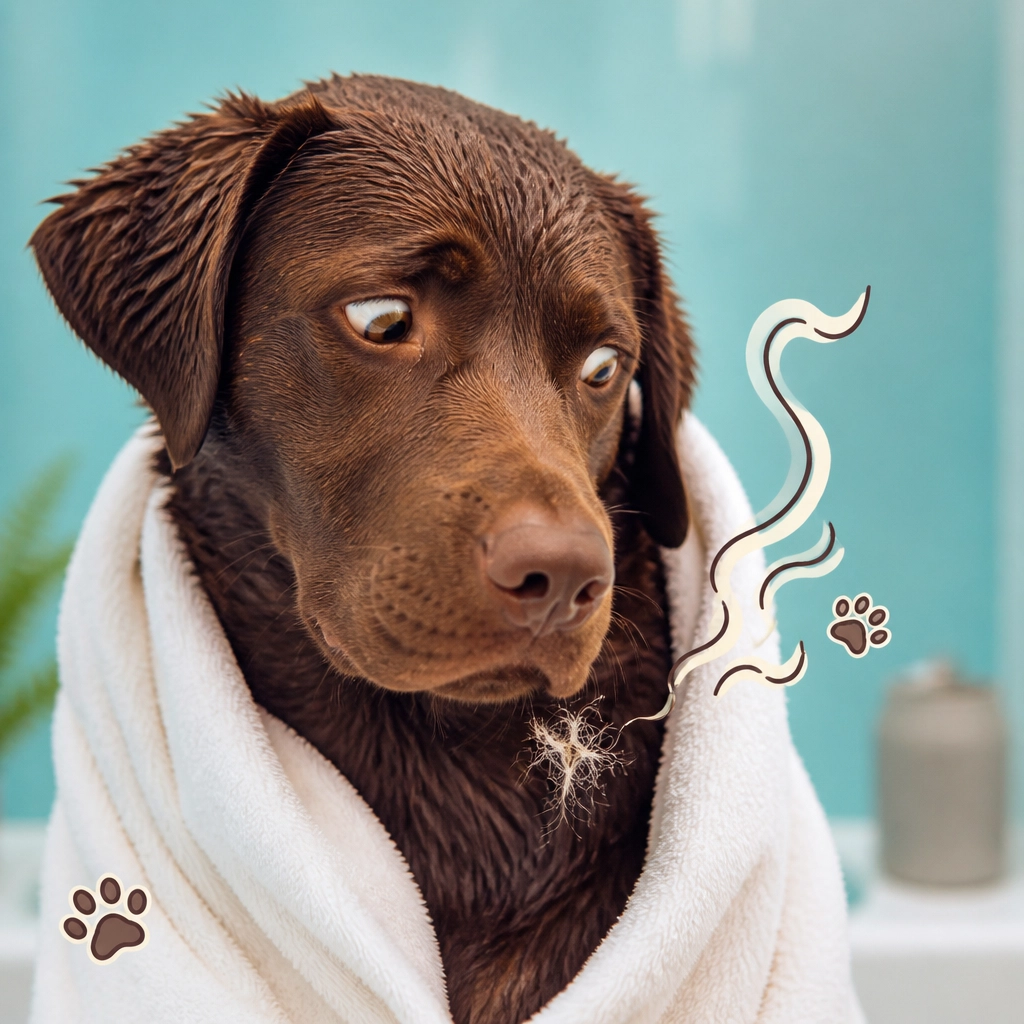
If the smell seems strongest around your dog’s head, ears may be the source.
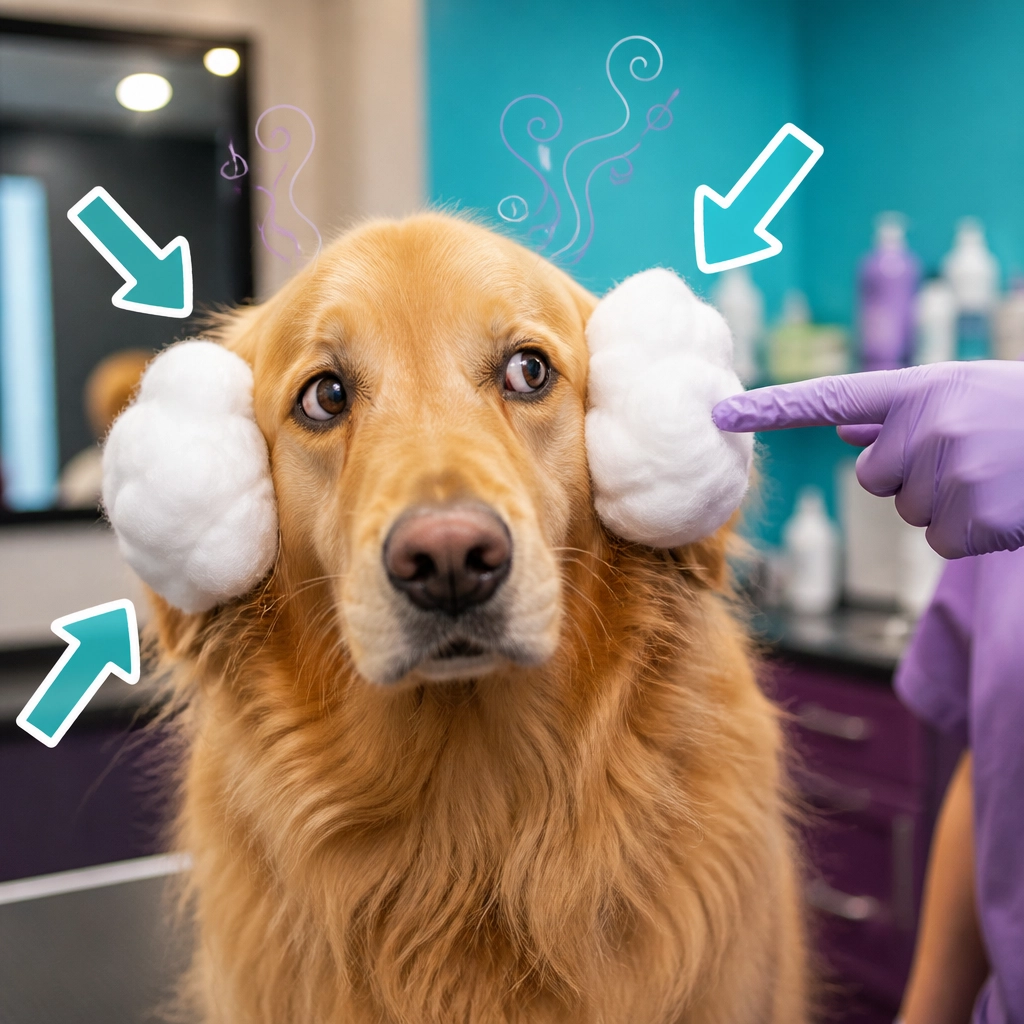
Ear infections can produce a sour, yeasty, or unusually strong smell. Floppy-eared dogs and dogs with hairy ear canals may be more prone to trapped moisture and reduced airflow.
Watch for signs such as:
- Head shaking
- Scratching at the ears
- Redness or swelling
- Dark wax or discharge
- Sensitivity when the ears are touched
- A strong smell that returns soon after grooming
A bath will not resolve an infection inside the ear canal. Your groomer may notice redness, odor, or unusual debris during the appointment, but a veterinarian should diagnose and treat an ear infection.
Never push cotton swabs deep into your dog’s ears or use a product that has not been recommended for your pet. You can learn more about general signs of persistent dog odor from resources such as Best Friends Animal Society’s guide to smelly dogs.
3. Anal Glands May Be the Real Source
A fishy or extremely pungent smell often comes from the anal glands.
Dogs have anal sacs on either side of the anus. Some dogs naturally empty them when they have a bowel movement. Others may need occasional professional assistance.
Common signs of an anal gland problem include:
- Scooting across the floor
- Licking under the tail
- Discomfort while sitting
- Sudden fishy odor
- Swelling near the anus
- Reluctance to let you touch the rear area
Dive Into Dogs includes gland expression as needed with full grooming services. However, if the glands appear swollen, painful, infected, or impacted, your dog may need veterinary care.
A recurring fishy smell is not something you should simply cover with fragrance. It is better to identify the cause and address it safely.
4. Skin Conditions Can Make Odor Return Quickly
A dog’s skin is a living ecosystem. Allergies, yeast overgrowth, bacterial infections, seborrhea, and irritation can all create persistent odor.
You may notice a musty, sweet, sour, or “corn chip” smell. Other possible symptoms include:
- Itching
- Red or greasy skin
- Flaking
- Hair loss
- Pimple-like bumps
- Licking or chewing at one area
- Moist, painful hot spots
Bathing may temporarily reduce the smell, but it will not cure an underlying skin condition. In fact, bathing too often or using harsh products can make irritation worse.
If your dog smells again within a day or two of grooming, schedule a conversation with your veterinarian. A medicated shampoo or other treatment may be necessary.
5. The Shampoo May Be Too Harsh or Too Low-Quality
Human shampoo is not made for canine skin. Dogs have a different skin pH, and products designed for people may cause dryness, irritation, and excess oil production.
Even dog shampoo can cause problems if it is:
- Poorly formulated
- Too heavily fragranced
- Not appropriate for your dog’s skin
- Not rinsed out completely
Residue left near the armpits, belly, paws, skin folds, or under the tail can trap moisture and create odor.
At Dive Into Dogs, your dog’s coat and skin condition help guide the grooming approach. Our services use pet-friendly products and can be tailored to your dog’s needs. For sensitive skin, ask about options such as an anti-itch spa treatment.
You can explore our mobile dog grooming services to see what is included in a full grooming visit.
6. Dental Problems Can Make Your Dog Seem Smelly All Over
Sometimes the smell is not coming from your dog’s coat at all. It is coming from the mouth.
Dental disease can cause powerful bad breath. Because dogs lick their fur, drool, and breathe close to you, the odor may seem like it is coming from the entire dog.
Look for:
- Yellow or brown tartar
- Red or bleeding gums
- Excessive drooling
- Trouble chewing
- Pawing at the mouth
- Reluctance to eat hard food or chew toys
Regular brushing can support oral hygiene, but professional veterinary dental care may be required for periodontal disease or damaged teeth.
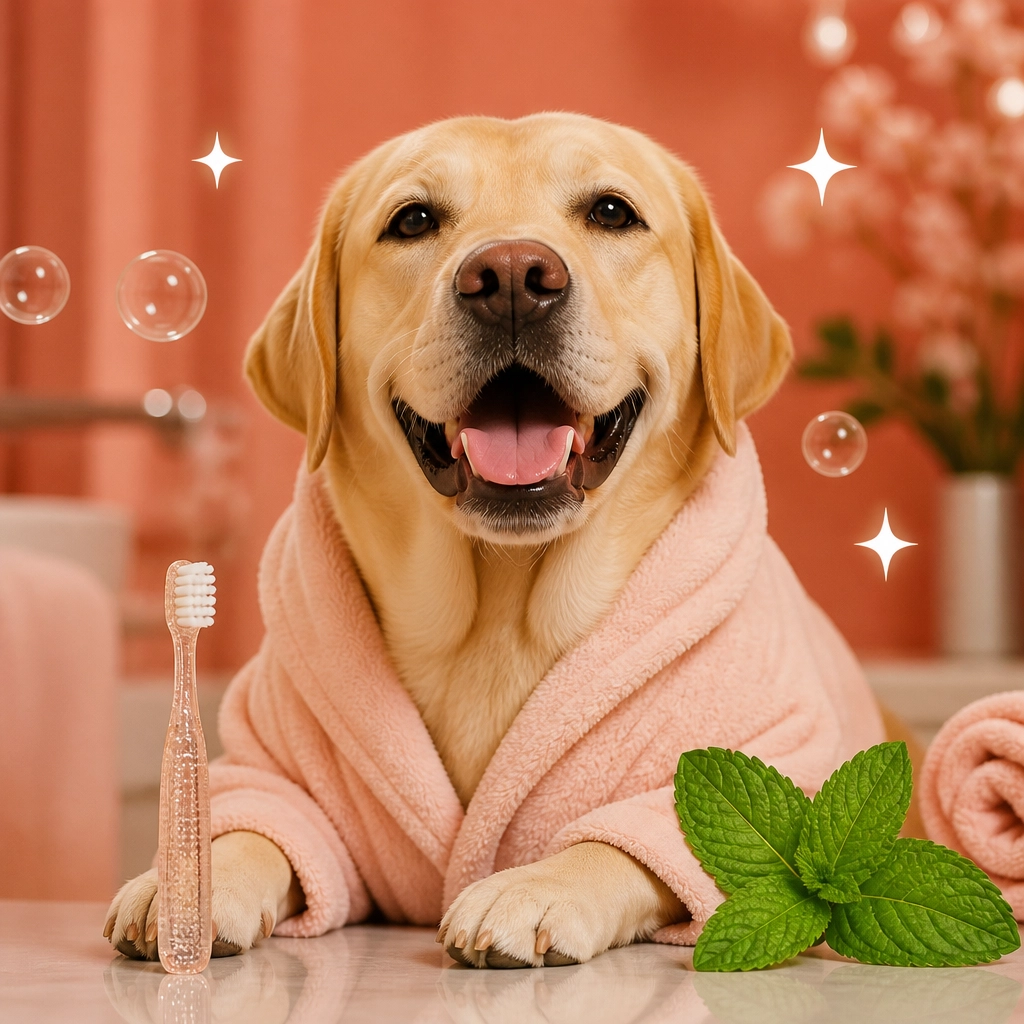
Dive Into Dogs offers enzymatic teeth brushing as an add-on. This is a helpful part of routine grooming, but it does not replace a veterinary dental exam when your dog has painful or advanced dental problems.
7. Your Dog’s Coat May Need More Than a Bath
A bath cleans the coat, but a full grooming visit can address additional sources of odor.
Dead undercoat, pollen, grass, dirt, and skin oils can become packed close to the skin. This is common in dogs who spend time hiking, swimming, playing in the yard, or relaxing outdoors during a hot Texas summer.
A complete grooming plan may include:
- Pre-bath brushing
- De-shedding
- Thorough shampooing
- Complete rinsing
- Professional blowout
- Coat trimming
- Ear cleaning
- Nail trimming
- Paw care
- Sanitary trimming
- Gland expression as needed
The goal is not to cover odor with perfume. The goal is to help your dog feel clean, comfortable, and healthy.
How Dive Into Dogs Helps Dogs Smell Fresh Longer
Dive Into Dogs brings a luxury grooming experience directly to your driveway in McKinney, Allen, and Prosper, with service also available for families in Melissa.
Our mckinney mobile dog groomer experience is designed around calm, individualized care:
- One-on-one grooming with no cages or kennels
- A temperature-controlled mobile grooming van
- A peaceful “Sanctuary of Silence” experience
- Experienced and certified lead groomer Maddie
- Services for dogs of all sizes
- Coat-specific brushing and drying
- Luxury options such as hydromassage, blueberry facials, and oxygenated baths
We welcome small dogs, large dogs, and everything in between. That includes golden retrievers, labs, doodles, senior dogs, and breeds with dense or challenging coats.
Whether you are searching for a prosper mobile dog groomer, a melissa mobile dog groomer, or convenient mobile dog grooming mckinney families can rely on, we bring the salon to you.
That means less time in the car, no crowded salon waiting area, and less stress for dogs who struggle with unfamiliar environments.
We regularly serve neighborhoods and communities such as:
- Stonebridge Ranch
- Windsong Ranch
- Star Trail
- Adriatica
- Trinity Falls
- Allen
- McKinney
- Prosper
- Melissa
See our full service areas to learn more.
When Should You Call Your Veterinarian?
Contact your veterinarian if your dog’s odor is persistent, unusually strong, or accompanied by discomfort.
Pay special attention to:
- Ear odor with discharge or head shaking
- Fishy odor with scooting or swelling
- Red, greasy, itchy, or painful skin
- Open sores or hot spots
- Severe bad breath
- Trouble eating
- Lethargy or behavior changes
- An odor that returns after every bath
A professional groomer can identify changes and keep your dog’s coat clean. Your veterinarian can diagnose and treat medical conditions.
The Bottom Line: Why Does My Dog Smell After Grooming?
If your dog still smells after grooming, the odor may be coming from damp undercoat, trapped debris, shampoo residue, ears, anal glands, dental disease, or a skin condition.
The right answer is not always another bath. Your dog may need better drying, de-shedding, a different product, routine dental support, or a veterinary examination.
Dive Into Dogs makes proper grooming more convenient with one-on-one care, luxury spa services, and experienced handling for dogs of all sizes. First-time clients can use code NEW15, and every visit is backed by our 100% Pooch Happiness Guarantee.
If you are ready to book, contact us so we can get you taken care of.
Dive Into Dogs ( Bringin’ the Spa to Your Paw.)